Can Spatial Computing Reshape Health Care?
Whoever you are, wherever you live, the future of Health Care is one of the most important factors in your life.
Will everyone have access to doctors? Can everyone afford their fees? What ailments will be curable? How many patients will suffer with undiagnosed conditions? What kind of technology will we have at our disposal?
The questions that rattle around in our heads when it comes to how we manage our personal heath may change dramatically as spatial computing tools enter all fields of medicine. They may equalize Health Care in many ways.
The Diagnostic Tools of Tomorrow
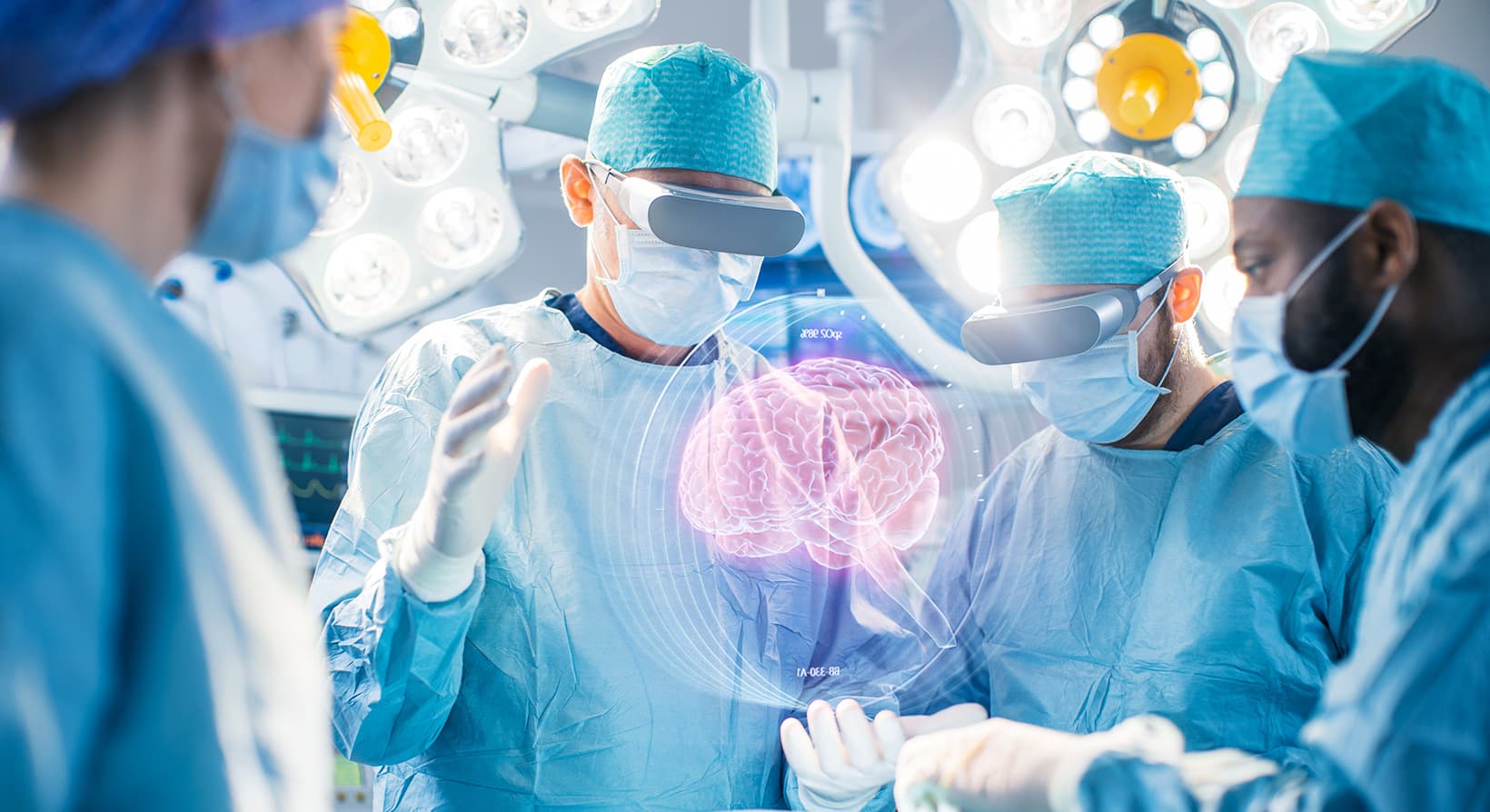
At the moment, we have tools like ProjectDR, which use AR to project medical imaging scans onto a patient’s body in real time. This same technology can assist in visualizing surgery as well, both in the operating room and while training new doctors.
Now picture the next step in the evolution of this technology. Imagine visiting a doctor who has equipment that can perform sophisticated non-invasive tests, producing a diagnosis quickly and accurately.
As though medical imaging straight out of science fiction isn’t impressive enough, Artificial Intelligence will be added to the mix. Extrapolate the effectiveness of that one brief appointment and picture how many more trained professionals can be a part of patient screening.
All of that means more technicians, seeing more patients, faster and easier.
VR Leading Research & Training
Virtual Reality also makes possible new levels of medical research. At Cambridge University for example, Cancer Research UK is studying 3D tumours inside a VR program.
Tablet-based applications, like those developed by EON Reality, are intended to function both as a diagnostic tool and as an educational resource. EON’s current offerings cover chest emergencies, sepsis awareness, and breech birth scenarios, but many other developers are covering a much broader range of care.
We will soon have tablets and headsets that can learn along with their human operators, accelerating medical knowledge at an exponential rate.
New Levels of Assisted Living
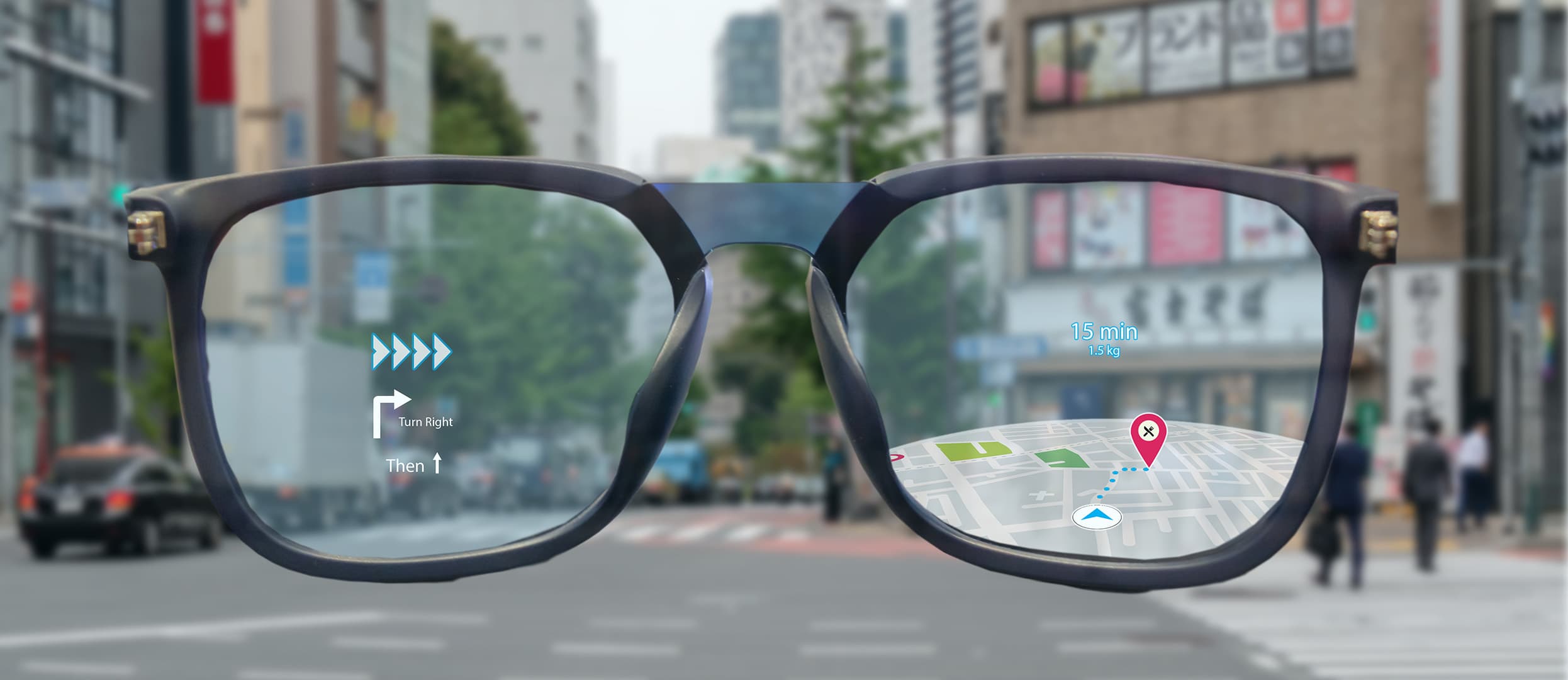
We’ve often said that technology is meant to solve problems rather than just look fancy. This is probably most relevant to Health Care where functional progress has immediate benefits for human quality of life. NuEyes takes usability and practicality to heart with smart-glasses that act as a visual prosthetic for people with extreme vision impairment. Rather than replicating the real world in a heavy headset, these AR glasses are a hands-free solution for bringing the real world into better focus.
Electronic Caregiver has adapted the concept of a virtual assistant for ongoing health maintenance tasks. At CES 2019, they introduced Addison, a virtual home care nurse developed with Amazon’s Sumerian Host platform. Addison monitors everything from medication to posture. And of course, she can call for help, should the need arise.
Smart prosthetic limbs are in the works as well which will be capable of brain/machine interfacing, equipped with smart skin and lifelike design.
When we picture the future of assisted living, we can forget visions of robots replacing nurses. This is a future in which many problems are corrected at the source.
As a founding partner in XR Lab inside BC’s Health & Technology District, Stambol watches Health Care technology with keen interest. Ask a Stambol team member what we can demonstrate remotely – or in person – to showcase the future of Health Care through spatial computing.
Image Credit: Gorodenkoff / Adobe Stock